about the photography techniques assignment
The Photography Techniques Assignment has five primary goals:
- to help students learn to learn about and implement various photography composition techniques
- to help students be more intentional in their photography
- to help students learn to have their photographs tell stories
- to help students learn how discuss photography composition decisions
- to reflect on the work they have created
The assignment is informed by four Course Learning Objectives:
Objective 1: Effective Communication
Students will begin to understand the foundational and contemporary principles, practices, and ethics of effective media communication, in particular in terms of how it applies to writing, design typeface, and photography.
Objective 2. Presentation Design
Students will begin to understand the principles and practices of effective presentation design and structure.
Objective 3: Inquiry and Reflection
Students will begin to develop their understanding of the important roles of inquiry and reflection during the reading, creation, and communication process.
Objective 4: Experimentation
Students will know what it feels like to step out of their comfort zones and take risks with their approaches to and understanding of communication.
(Note: All photos linked to on this page by Bill Wolff.)
photography assignment specifics
“If you want your images to mean more to you, to be more compelling to those who experience them, then it’s deep, more intentional photographs for which you hunger.”
— David duChemin (2017)

“I ask, ‘Does [the photograph] have soul?’ Is it alive? Do I see something of the artist within? Does it move me? Does it make me think? Does it challenge me? Does it enrich my human experience?”
— David duChemin (2017)


This assignment is going to ask you to create intentional photographs by deliberately composing your images according to various composition techniques and by finding subjects that lead us toward what David duChemin would call creating photographs with soul.
To complete the assignment, you will be using the camera on your phone. If you do not have a phone with a camera, email Bill immediately.
Specifically, each student will be submitting:
- 5 Full Color Technical Photographs and
- A Photo Series of 5 black and white Soulful photographs (that also incorporate composition techniques)
This does not mean you will only be making 10 photographs overall. You will need to create many dozens of images in order to get to the point where you can be happy submitting your final curated 10 images.
As part of the assignment, each student will submit 10 total draft images that Bill will review via video comments.
All images must be made for this project (they cannot be old images you think meet the criteria) and can be most anything you would like, with the exceptions that:
- they cannot be snapshots of friends or family (updated)
- they cannot be banal
- they cannot be items in your apartment or living space (you need to get outside)
- they cannot be selfies
- update: cannot be holiday themed
I recommend varying your subjects so you can get the most diverse portfolio of images you can get.
The Technical Images
For the 5 full color technical images, each student will look to the composition post we read and create:
- 1 image that showcases Rule of Thirds
- 1 image that showcases Depth of Field (what the post calls Foreground Interest and Depth)
- 3 additional images that showcase 3 different composition techniques or a combination of techniques (such as, depth of field and textures)


In total, 5 distinct composition techniques will be represented. Though these are so-called technical images, they should also be aesthetically pleasing and represent you in some way.
The Photo Series: Soulful Images
For the soulful images, each student will look to the duChemin reading to choose ONE passage from duChemin you find particularly insightful, creative, intriguing, or you are otherwise curious about. The passage from duChemin you choose can be the one(s) you selected to write about for week 9 or a different one.
You will then create a photo essay of 5 black and white images that you feel illuminate, represent, or otherwise embody the ideas in the passage you have chosen. These images should tell a story.
Each image must also adhere to one of the composition techniques. In other words, the photo essay will blend duChemin’s storytelling approach with photographic composition.
In addition to the two quotes at the top of this section, here are some examples that stand out to me (with links to some of my photos that I feel exemplify them):
- “The answer is more humanity. More soul.” (p. vii)
- “[T]he best advice I’ve ever heard: ‘Don’t struggle so much, the best things happen when not expected.” (p. 95)
- “Curiosity is the insatiable desire to peer into that unknown and discover what lies there, to see what new possibilities exist.” (p. 107)
- “What would happen if I changed my point of view?” (p. 108)


You are free to use these passages or select from some of the many that stand out to you.
When photographing, envision that the photo will be black and white. If your phone can shoot in black and white, choose that option. If not, convert the image to black and white before you export it from your phone to your computer.
Work for Week 11
The work for Week 11 is going to get you outside taking photos and, if they exist, practicing with the manual camera settings on your phone—specifically, adjusting the f-stop/aperture to control your depth of field.
Due Sunday, April 5, Tuesday, April 7, by 11:00pm.
Learning Aperture
To get started, please watch the following video about aperture:
Getting Out and Take Photos
I have created the following handout that I’d like you to print and have with you as you go out and take photos:
You will see that the handout is asking you to take photos based on many of the photo techniques you read about for Week 9 and to start working on creating what duChemin termed Soulful Images.
Rule of Thirds Grid
You might find it useful to have the Rule of Thirds grid appear on your camera screen.
- iPhone: Settings –> Camera –> Grid (switch to on)
- Android: Open Camera –> Swipe left to reveal menu –> Settings –> Grid (check box)
Manual Settings
To create the work, you will need to use the Manual settings (if your phone allows) to select the correct aperture.
iPhones that have Portrait Mode before version 26
If you were smart at did not update your iPhone to version 26 (which is just horrible), open your camera, select Portrait mode and then click on this icon:

iPhones with version 26 installed
If, like me, you installed version 26, getting to the f-stop settings takes a bit longer:
- Open the Camera.
- Slide the mode slider to Portrait.
- Click on the icon with the 6 dots.
- Click on the f-stop icon.
- Slide to the appropriate f-stop
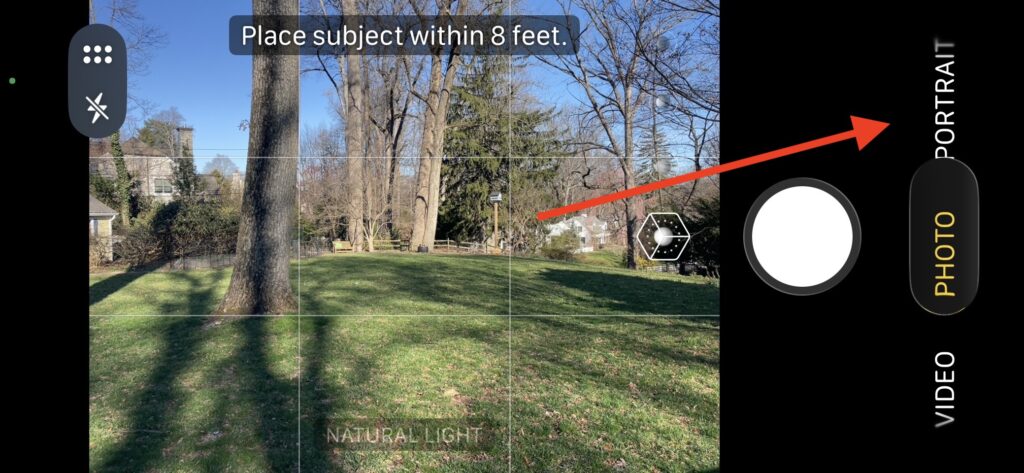
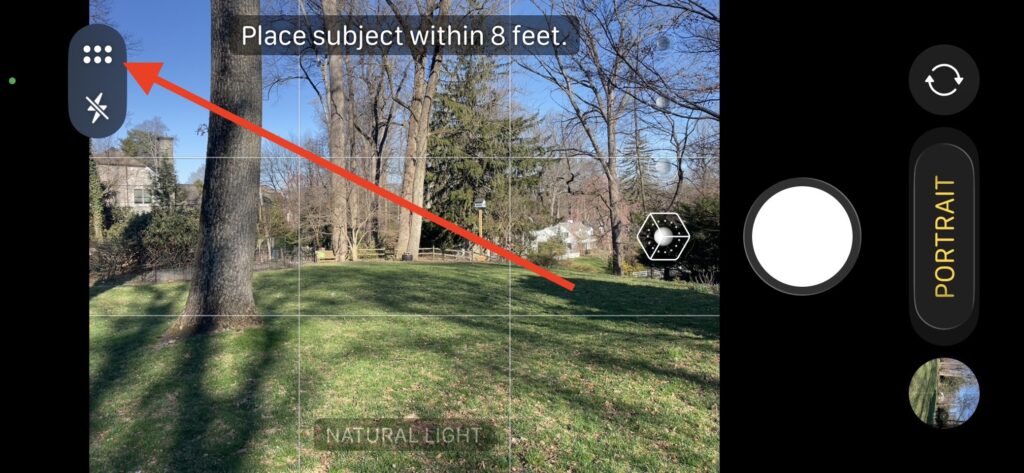
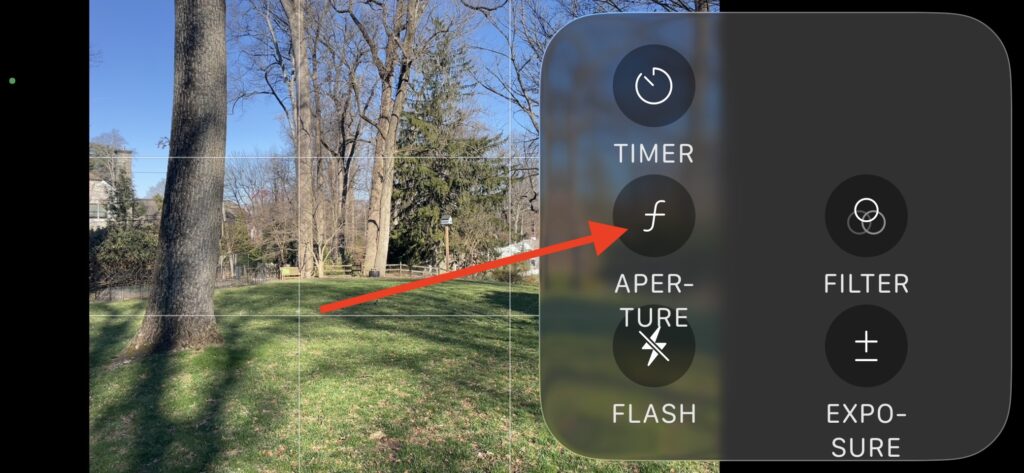
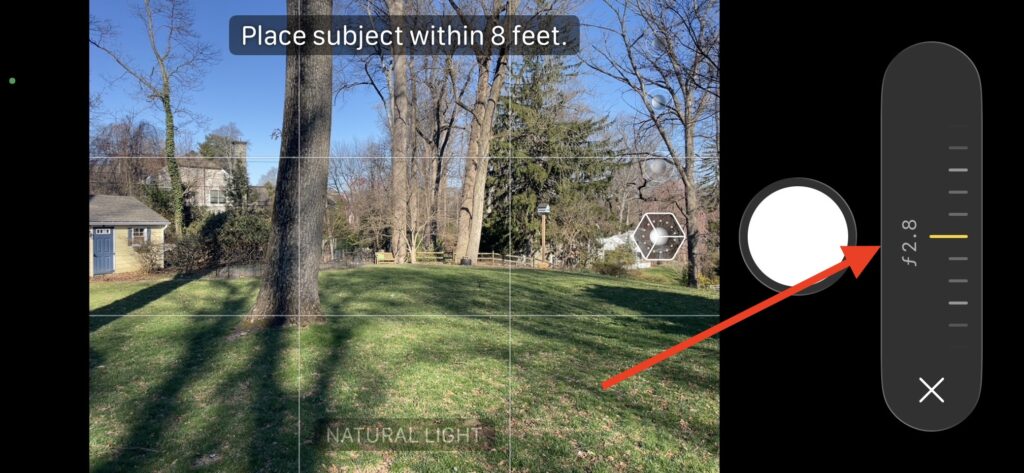
Here’s a short video of the process:
Android Phone
On an Android phone, you need to be in Pro mode and click on this icon:

Then, you select the f-stop you want from the slider. The sliders look and feel very similar on each device.
Uploading Your Work
Once you have completed taking your photos, I’d like you to narrow them down to 10 total photos for me to consider:
- 5 full color photos that represent the composition techniques
- 5 black and white photos that represent the duChemin passage
Create two folders in your SJU-related Google Drive:
- Techniques-Draft
- You MUST name the files with the technique in the filename, like rule-of-thirds.jpg or leading-lines.jpg. I cannot comment on them without these descriptive filenames.
- Soulful Images-Draft
- After the link, type in the duChemin passage that is inspiring your photos. As with the Techniques, name your files for the technique you were trying to use.
Upload the photos to the appropriate folder. Make sure you have set the permissions in your folder so anyone with the link can see it.
Final Submission Details
The final photography submission will include both the final 10 photographs you select as well as a short discussion of those photographs using the same minimalist Canva presentation format we used for the poster project. The photographs will count as 50% of your final project grade and the presentation will count as 50% of your final project grade.
You can see the rubric at:
IMPORTANT: Comments on Photo Drafts
Before moving on to the final work, watch the video with comments on photo drafts. I emailed everyone a link to the video, which is private. Watch the whole thing as it will give you insight into what works and what does not, as well as how I am viewing the compositions.
After watching the video, you will know if you need to take additional photos (all of you will need to).
The Final Photographs
Each student will choose and submit:
- 5 Full Color Technical Composition Photographs and
- A Photo Series of 5 black and white Soulful photographs (that also incorporate composition techniques)
These photos can be ones taken for the drafts that were due Week 11, the ones you take for Week 12, or a combination of both. But, only submit TEN total.
For the 5 Full Color Technical Composition Photographs, each student will look to the composition post we read and create:
- 1 image that showcases Rule of Thirds
- 1 image that showcases Depth of Field (what the post calls Foreground Interest and Depth)
- 3 additional images that showcase 3 different composition techniques or a combination of techniques (such as, depth of field and textures)
For the 5 Soulful Photographs, each student will look to the duChemin reading to choose ONE passage from duChemin you find particularly insightful, creative, intriguing, or you are otherwise curious about. The passage from duChemin you choose can be the one(s) you selected to write about for week 9 or a different one.
You will then create a photo essay of 5 black and white images that you feel illuminate, represent, or otherwise embody the ideas in the passage you have chosen. The one passage should apply to all 5 photographs. Do not choose five passages.
Each image must also adhere to one of the composition techniques. In other words, the photo essay will blend duChemin’s storytelling approach with photographic composition.
Uploading and Naming Your Photographs
Once you have completed taking your photos, I’d like you to create two folders in your SJU-related Google Drive (these should not be the same folders as your draft photographs):
- Final Technical Composition
- name your images with the technique you have used, such as rule-of-thirds.jpg, depth-of-field.jpg, etc.
- Final Soulful
- name your images with the technique you have used, such as rule-of-thirds.jpg, depth-of-field.jpg, etc.
Upload the photos to the appropriate folder. Make sure you have set the permission in your folder so anyone with the link can see it.
The Presentation
The presentation will have a total of 12 slides and must be less than 5 minutes long. Be concise.
These 12 slides are:
- Introduction / Title Slide (include 3 photos)
- 1 slide for each of your 5 Technical Composition photographs
- 1 must showcase Rule of Thirds (include overlay)
- 1 must showcase Depth of Field (include f-stop)
- 3 others of your choice
- 1 slide for your chosen duChemin Passage
- 1 slide each for each of your 5 soulful photographs
To show the Rule of Thirds, use the appropriate transparent Rule of Thirds overlay. To download, right click and save as:
- rule of thirds grid square (png)
- rule of thirds grid vertical (png)
- rule of thirds grid horizontal (png)


See the below video for how I would like you to present your work:
Course Info at a Glance
- Office Hours: MW 2:00 – 3:00
- Office Location: Bronstein Annex 202
- Intro to Com s26 Quicklinks
- COM 100 Design Spaces
Submission Information
Your final work is due by 11:00pm Sunday, April 19. If you complete it early, that is just fine, too.
To submit your work, in the Week 12 section of your Discussion and Design Journal document, please paste:
- a link to your Final Technical Composition folder
- a link to your Final Soulful folder
- a link to your final presentation
You do not need to add anything else for Week 13. Make sure Bill has permission to see the contents of the folders and presentation.
Bill will later share graded rubrics.