About the Course Calendar
Most texts will be read in class. Homework is in yellow.
Jump to a week: 1 | 2 | 3 | 4 | 5 | 6 | 7 | 8 | 9 | 10 | 11 | 12 | 13 | 14 | 15 | 16
Week 1: Introductions
M 1/12: Introductions
Assignment for Wednesday, 1/14
We’re going to get started pretty slowly this week. So, just a few little assignments and then we’ll get going next week.
If the course packet is ready, you are required to have it in class with you on Wednesday. I will email you by Tuesday at 4:00 letting you know if it is ready.
Please read through the course web site carefully and post two questions you have about it to this anonymous form:
https://forms.gle/hdNnpwj5BxjvbG7u7
If you have yet to complete the confidential Start of Semester survey I emailed last week, please do.
If you have any questions, just let me know.
W 1/14: McCloud; must have the course packet in class
F 1/16: Class Cancelled
Week 2: Semiotics
M 1/19: MLK, Jr. Day, no class
Assignment for Wednesday, 1/21
If you have yet to do so, please complete the following:
- Purchase the course packet from the bookstore and bring it to class every day from now on.
- Read through the course web site carefully and post two questions you have about it to this anonymous form: https://forms.gle/hdNnpwj5BxjvbG7u7
- Complete the confidential Start of Semester survey I emailed last week, please do.
Otherwise, have a great holiday weekend and let me know if you have any questions.
W 1/21: Hall
Hand out the Weekly Discussions and Discoveries Assignment
Assignment for Friday, 1/23
In class on Wednesday we read “Signs and Signing” by Sean Hall, which introduced a variety of concepts that contribute to the process of meaning-making. Those include the foundation concepts of semiotics—sign, signifier, and signified—as well as the form that signs take, such as icons, metaphors, indexes, symbols. It also included the process of how meaning is made as it goes from sender to receiver and the noise that often interfere with a message actually making it accurately.For Friday I’d like you to review what we have read. Then, start looking where you tend to spend time in person and/or online and look for these concepts “in the wild.” Make note of what you are seeing, what semiotic concept(s) with which it aligns (it could be more than one), and how it is functioning—that is, how it is making meaning. If online, save the link to it. We will be able to bring in the link up in class.
Don’t look too hard or you will miss what is right in front of you. Signs and signifiers are everywhere.
Please also read the Biweekly Discussions and Discoveries Assignment and come to class with questions you may have.
F 1/23: Discussion and Discovery; notes for Hall (.pdf)
Week 3: Mapping & Sparklines
Assignment for Monday, 1/26
The only work to be completed after class on Friday is your first Biweekly Discussions and Discoveries Assignment entry.For your first entry, I would like you to choose to discuss what you have learned, discovered, and what questions you may have based on the McLoud reading on the gutter and closure in comics or Hall on semiotics.
In your What I Learned section, be sure to cite from the reading and add links to what you may have found based on your own research.
For the Discoveries section, when doing research, do not rely on AI or Wikipedia alone. You may start with Wikipedia for summary, but always go further by looking into the citations. AI summaries are not reliable. Do not use them. Research does not need to be found online or academic; it can be in the form of examples you have found (online or offline) that have helped you understand the readings.
The entry is due before the start of class on Monday.
M 1/26: Tufte; Class canceled due to snow
W 1/28: Tufte and Discussion; perhaps Hans Rosling TED Talk
Assignment for Friday, 1/30
Thank you all for joining class via Zoom on Wednesday. It’s not ideal, but it allowed us to have a quiet moment to read Tufte. If you were absent, please read pages 39 – 61 in the packet. They are by preeminent statistician, data scientist, and visual information guru, Edward Tufte. Once you have read and annotated the text, please complete this brief form, which may inform our discussion on Friday:https://forms.gle/Ed3GjCySFzV9iA8W9
Look forward an email from me Thursday afternoon about whether class will be in-person or via Zoom.
F 1/30: Discussion and discovery
Week 4: Mapping as Storytelling
Assignment for Monday, 2/2
This weekend, I’d like you to keep an eye out for beautiful evidence presentations and think about them in terms of what we read in Tufte and discussed in class on Friday. Look for mapped scales and sparklines.I have now commented on and graded all completed first Biweekly Discussions and Discoveries Assignment entries. If you have not completed yours yet, complete it immediately and let me know when you have. These don’t take a lot of time and you don’t want to get behind.
We will be back in the classroom on Monday.
If you have any questions, please let me know.
M 2/2: Turchi and Pearce; Mercator Projection; Gall-Peters Projection; Upside Down map; True Size of Map
Assignment for Wednesday, 2/4
In class on Monday we read in the packet the selection from Turchi (packet pages 62-69) and the second selection from Margaret Wickens Pearce, “Making the Coming Home Map” (packet pages 87-93). These are both on the subject of mapping as storytelling. I’d like you to review these articles at home and be prepared to discuss them in class on Monday. Please read about Margaret Wickens Pearce in the article, “Redrawing the Map” (note: you can only click the link once before being as to subscribe. If you need to re-open it, use a different browser.)I’d also like you to spend some time with two maps that are linked off the Readings and Texts page:
- Pearce’s Coming Home to Indigenous Place Names in Canada map.
- Decolonial Atlas’s Turtle Island Decolonized map
You will need to zoom in pretty far to see the maps. When viewing them, think about what story the maps are telling. Think about them in relation to traditional maps you have see of North America.
If the subject of Indigenous maps interests you, please feel free to read the other piece by Pearce in the packet, “The Last Piece is You,” which is about the map, Iyoka Eli-Wihtamakw Kǝtahkinawal / This Is How We Name Our Lands, which maps traditional Penobscot lands in what is now known as Maine.
Come to class ready to think about mapping as storytelling. We’ll discuss the texts, the maps above, and many more examples.
If you have any questions, please let me know.
W 2/4: Discussion and various examples, including Monroe Work Today
Assignment for Friday, 2/6
For Friday, we are going to pick up on what we couldn’t get to on Wednesday because I had the flu. Please complete in the order presented.Part 1. Revisiting the Readings and work for Wednesday
Go back to the readings completed on Monday by Turchi and Pearce and pull out 2 or 3 passages from each reading that highlight how maps tell stories, especially as they reveal truths, ideas, or narratives that might not be over in the map presentation. They can be about narrative, choice, what is included or not included, and so on. Maps are decision artifacts—that is, the reflect conscious and unconscious decisions that are designed to highlight and obscure. Not all decisions are malicious, though they can be.For Wednesday, I asked you to look at these two maps:
- Pearce’s Coming Home to Indigenous Place Names in Canada map.
- Decolonial Atlas’s Turtle Island Decolonized map
For Friday, please locate some ways that make real passages you have selected and are decision artifacts.
Part 2. Moving to Other Maps
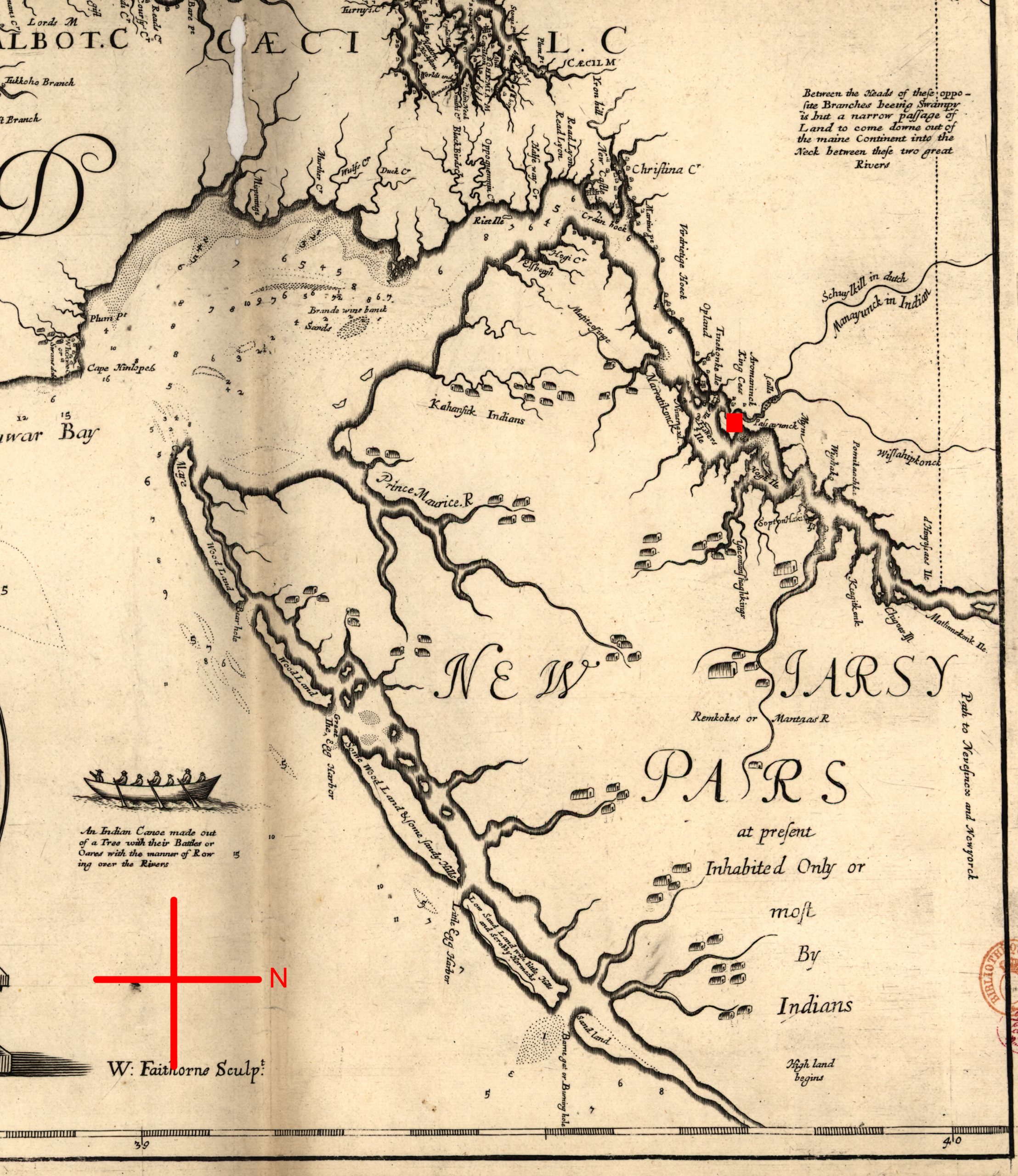
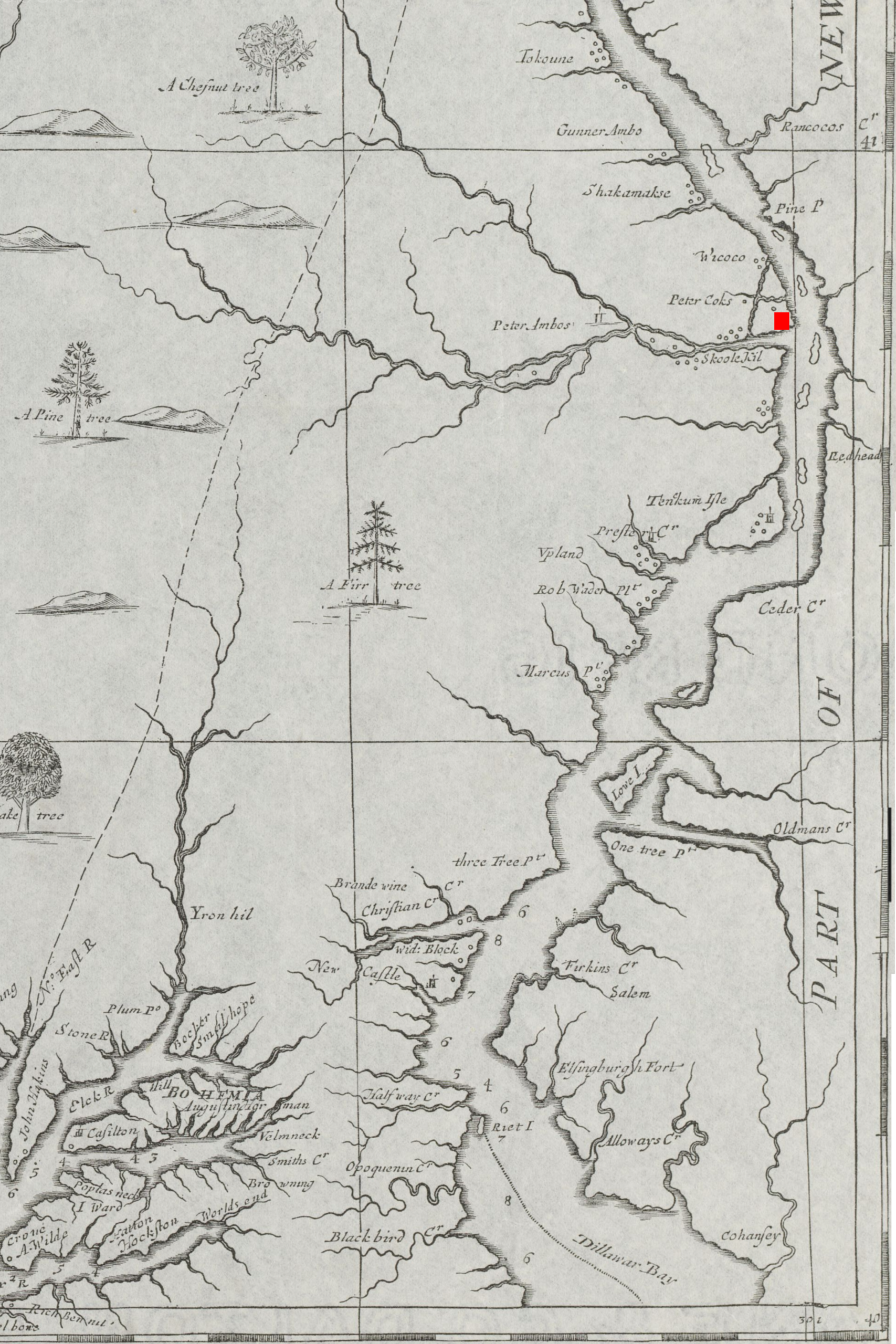
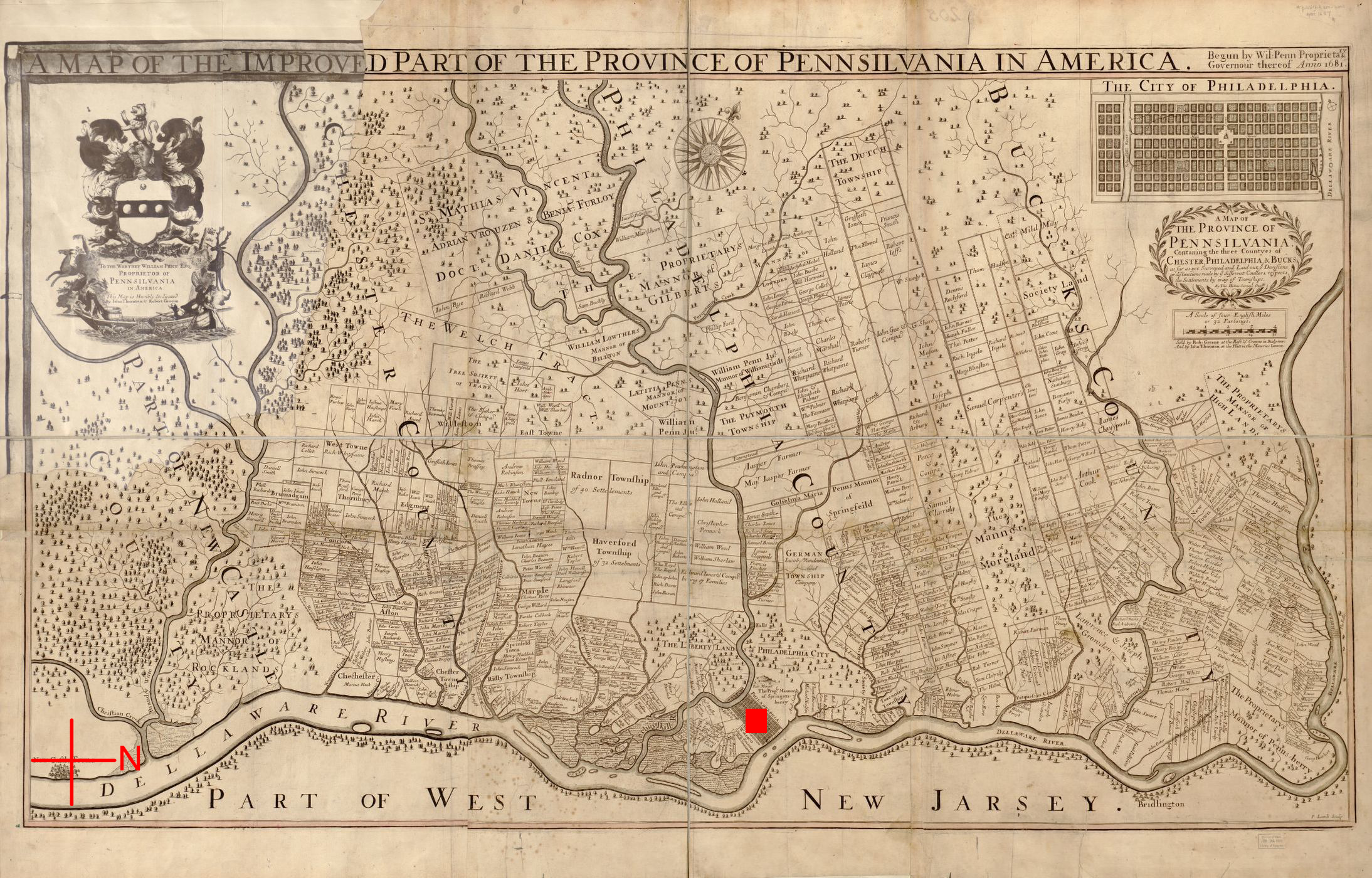
For Friday, we are going to stay with our Indigenous mappings theme, but also add a couple of other revealing maps to look at. First consider the story these three maps tell in succession, covering 17 years from 1670, 1681, and 1687:
- Crop from Virginia and Maryland as it is Planted and Inhabited this Present Year 1670 by Augustine Herrman (north is to the right; red square indicates Philadelphia)
- Crop from A Map of Some of the South and East Bounds of Pennsylvania in America, being partly inhabited, 1681, by John Thornton and John Seller (First Map Commissioned by William Penn after Land Charter; red square indicates Philadelphia)
- A Mapp of Ye Improved Part of Pensilvania in America, 1687, by Thomas Holme, John Harris, and Philip Lea (Commissioned by William Penn, north is to the right; red square indicates Philadelphia)
When thinking about the story, look at what is included from one map to the next, what is not included, and so on.
The second grouping is comparing these three global maps:
- Ancient Earth (see what the Earth looked like up to 750 million years ago; go year by year and see where Philly was in relation to the rest of the world)
- Native Lands (see he homelands of Indigenous societies)
- Google Earth
What stories do these global maps tell? Each of different inter-activities, so play around with them. Add your home address or Philadelphia and see what you see.
And, of you ant to see some very cool and fascinating map presentations, see the maps at World Mapper. Choose from the selections at the left.
Please have fun with this. It’s a lot of looking and thinking about subtext.
Let me know if you have any questions.
F 2/6: Discussion and discovery: worldmapper, ancient earth, other maps
Week 5: Mapping as Poetry
Assignment for Monday, 2/9
IMPORTANT: Class will be meeting in Bronstein Hall on Monday. Do not go to the classroom. There will be donuts, hot chocolate, and coffee.The only work to be completed for Monday is your second Biweekly Discussions and Discoveries Assignment entry.
For your second entry, I would like you to choose to discuss what you have learned, discovered, and what questions you may have based on the Tufte, Turchi, and Pearce readings on mapping and the maps we considered, as well.
In your What I Learned section, please quote directly from at least two of the readings and add links to what you may have found based on your own research.
For the Discoveries section, when doing research, do not rely on AI or Wikipedia alone. You may start with Wikipedia for summary, but always go further by looking into the citations. AI summaries are not reliable. Do not use them. Research does not need to be found online or academic; it can be in the form of examples you have found (online or offline) that have helped you understand the readings.
Many forgot to include 2 Questions in their first entry. Don’t forget them this time!
The entry is due before the start of class on Monday.
If you have any questions, let me know.
M 2/9: Wood
Assignment for Wednesday, 2/11
In class we read selections from Denis Wood’s beautiful book, Everything Signs: Maps for a Narrative Atlas (packet pages 94 – 128). For Wednesday, I’d like you to review what you read and as you do so, I’d like you to try to label some of the maps with semiotic terms (icon, index, symbol), Tufte terms (sparklines, mappings), and how Turchi might consider the maps telling stories.You might also listen to a great interview with Denis Wood on This American Life. Wood’s portion is in Act 1 (8 minutes).
I’d also like you to think about what similar kinds of maps you might make of your own neighborhood.
We will be back in Bronstein for class on Wednesday and Friday.We will be meeting in Merion 150, as Bronstein has been booked.If you have any questions, please let me know.
W 2/11: Discussion and examples; notes-for-turchi-pearce-wood.pdf
Hand out Semiotics Assignment
Assignment for Friday, 2/13
Please read through the Semiotics Assignment and come to class with questions and some ideas on which of the 4 options you would like to choose. You don’t have to decide yet, but start thinking about possibilities.In class, we will discuss the assignment in some detail as well as anything we didn’t get to on Wednesday.
If you have any questions, let me know.
F 2/13: Discussion and discovery
Week 6: Presentations
M 2/16: Tufte on presentations
Semiotics Assignment Proposal (.pdf) to be completed in class
W 2/18: Discussion and examples; notes-for-tufte-powerpoint.pdf
F 2/20: Discussion and discovery: Hans Rosling TED Talk (0:00-6:00 and 8:45 to 11:10); Emma Carlow Pecha Kucha
Week 7: Web Redesign Project Begins
Assignment for Monday, 2/23
The only work to be completed for Monday is your third Biweekly Discussions and Discoveries Assignment entry.
For your third entry, I would like you to choose to discuss what you have learned, discovered, and what questions you may have based on the Wood and Tufte readings on narrative atlas creation and limitations of Powerpoint, as well as the presentations we as what we discussed in class on Wed and Fri.
In your What I Learned section, please quote directly from at least two of the readings and/or reference the presentations we watched on Friday. Add links to what you may have found based on your own research.
For the Discoveries section, when doing research, do not rely on AI or Wikipedia alone. You may start with Wikipedia for summary, but always go further by looking into the citations. AI summaries are not reliable. Do not use them. Research does not need to be found online or academic; it can be in the form of examples you have found (online or offline) that have helped you understand the readings.
Many forgot to include 2 Questions in their first entry. Don’t forget them this time!
The entry is due before the start of class on Monday.
I will also be sharing with you your midterm Engagement and Presence documents. Those must be completed by Friday, 2/27.
If you have any questions, let me know.
M 2/23: Class canceled due to snow
W 2/25: Goto and Colter chapter 2
Hand out Re-design ProjectMappings Assignment Draft Due in class
F 2/27: Project groups assigned; beginning site analysis; notes-for-sju-website.pdf
Midterm Engagement and Presence Due by 11:00pm
Spring Break: 3/2 – 3/6
Week 8: Site Inventory/Creative Brief
M 3/9: Goto and Colter chapter 3
Assignment for Wednesday, 3/11
Not much for Wednesday. I’d like you to review Goto and Colter chapter 3, “Phase 1: Defining the Project” (packet pages 153-170), reading packet pages 171-177 on Audit Methodology and 180 – the top of 182 on Sitemapping. Read carefully the requirements for the Site Inventory and Analysis portion of the assignment. Come to class ready to dive in and start collaborating with your group.If you have any questions, please let me know.
W 3/11: Work on project
F 3/13: Work on project; generate client meeting questions
Discuss Updates on Project 1
Week 9: Usability and Usability Testing
Assignment for Monday, 3/16
Gor Monday, complete your Week 8 Biweekly Discussions and Discoveries Assignment entry.For this your third entry, I would like you to choose to discuss what you have learned, discovered, and what questions you may have based on our readings from Goto and Colter and what you have found based on your own research about the website redesign process.
In your What I Learned section, please quote directly from the readings. Add links to what you may have found based on your own research.
For the Discoveries section, when doing research, do not rely on AI or Wikipedia alone. You may start with Wikipedia for summary, but always go further by looking into the citations. AI summaries are not reliable. Do not use them. Research does not need to be found online or academic; it can be in the form of examples you have found (online or offline) that have helped you understand the readings.
Many have forgotten to include 2 Questions their entries. Don’t forget them this time!
The entry is due before the start of class on Monday.
You should also continue to work on your responsibilities for Project 2.
If you have any questions, let me know.
M 3/16: Goto and Colter on Usability
Assignment for Wednesday, 3/18
For Wednesday, please review what we read in class (packet pages 204-2014 on usability) and continue working on your web redesign work.I’d also like you to read the following short articles on usability:
- Guidelines for Visualizing Links (May 10, 2004)
- Reduce Redundancy: Decrease Duplicated Design Decisions (June 9, 2002)
- Deep Linking is Good Linking (March 3, 2002)
- First Rule of Usability? Don’t Listen to Users (August 5, 2001)
- How People Read Online: New and Old Findings (April 5, 2020)
- Is Navigation Useful? (January 9, 2000)
- Explicitly State the Difference Between Options (August 23, 2024)
If you have any questions, please let me know.
W 3/18: Neilson Norman Group on Usability
F 3/20: Usability Testing Prep
Week 10: Research and Project Week
M 3/23: Class canceled — conduct usability tests and work on Project 1
W 3/25: Class canceled — conduct usability tests and work on Project 1
F 3/27: Class meets; Creating the Executive Summary
Project 1 Drafts due; Usability Tests Due
Week 11: Transition from Data to Design
Assignment for Monday, 3/30
Please read through the Creating the Executive Summary heading and start working on the Executive Summary.By Monday at the start of class, drafts of all parts of the Creative Brief must be in the group GoogleDrive folder.
M 3/30: Finalize Creative BriefCreative Brief due by 11:00pm
W 4/1: Goto and Colter, Chapter 4 Finalize Creative Brief
Creative Brief due by 11:00pm
F 4/3: Easter Break — Class Canceled
Week 12: Emotional Design
M 4/6: Easter Break — Class Canceled
Assignment for Wednesday, 4/8
Prior to the start of class on Wednesday, I’d like you to read chapters 1 – 4 of Aarron Walter’s wonderful short book, Designing for Emotion (it’s a quick read with lots of pictures), which you can find on the Readings and Texts page. Emotional design is a concept that encourages thinking about designs (and websites specifically) as having the characteristics of people.Come to class with 3 questions you have about designing for emotion and 3 examples of emotional design you have found online or in person. Be ready to discuss them in class.
If you have any questions, please let me know.
W 4/8: Emotional Design
Assignment for Friday, 4/10
The final Creative Brief must be fully complete and revisions fixed by the start of class on Friday. Use the Checklist I created to ensure everything is done.Also due in class, are your 3 usability test sheets and a completed discussion of your contributions to the Creative Brief work (flip side of the checklist). You must have these in class with you on Friday.
Please also read in the packet, packet pages 182 (starting with the “Addressing Existing Site Organization”) through page 203). We will discuss these and the reading for Wednesday in class on Friday.
Your Maping/Semiotics Assignment final work and presentation is due Friday by 11:00pm. Please use the final project and presentation submission form I have shared with you (you must be logged in to your SJU account to complete it).
If you have questions, please let me know.
F 4/10: Goto and Colter, Chapter 4
Mapping Assignment due by 11:00pm
Week 13: Sketches, Wireframes, Mockups
Assignment for Monday, 4/13
We’re getting back to your Biweekly Discussions and Discoveries Assignment entries for Monday (after having skipped Week 10).For this your fourth entry, in your What I Learned section, I would like you to choose to discuss what you have learned, discovered, and what questions you may have based on our what you have completed while doing the work for the Creative Brief. Don’t write about what to have learned about the site you’re researching. Rather, write about what you have learned about the process necessary to do the inventory and analysis that results in the Creative Brief.
For the Discoveries section, do some work on usability, what you have foujnd ablout it, and speculate as to how it might help you as you move into the next phase of the project. As usual, when doing research, do not rely on AI or Wikipedia alone. You may start with Wikipedia for summary, but always go further by looking into the citations. AI summaries are not reliable. Do not use them. Research does not need to be found online or academic; it can be in the form of examples you have found (online or offline) that have helped you understand the readings.
Many have forgotten to include 2 Questions their entries. Don’t forget them this time!
The entry is due before the start of class on Monday.
And if you have yet to read chapters 1-4 of Designing for Emotion (on the Readings and Texts page) and packet pages 182 (starting with the “Addressing Existing Site Organization”) through page 203), please do as they are necessary for moving forward with the project.
If you have any questions, please let me know.
M 4/13: Work on Project
W 4/15: Work on Project
F 4/17: Work on Project
Pencil sketches due by start of class
Week 14: Mockups
M 4/20: Work on Project
W 4/22: Work on Project
Basic Wireframes due by start of class
F 4/24: Work on Project
Week 15: Presentations
Assignment for Monday, 4/27
Your last Biweekly Discussions and Discoveries Assignment entry is due on Monday.For this entry, in your What I Learned section, I would like you to choose to discuss what you have learned, discovered, and what questions may have come up based on our what you have completed while doing the work for the wireframes and mockups. Don’t write about what to have learned about the site you’re researching. Rather, write about what you have learned about the process necessary to do this work.
For the Discoveries section, do some research on what makes an effective mockup and consider how you might be able to apply that in your work. As usual, when doing research, do not rely on AI or Wikipedia alone. You may start with Wikipedia for summary, but always go further by looking into the citations. AI summaries are not reliable. Do not use them. Research does not need to be found online or academic; it can be in the form of examples you have found (online or offline) that have helped you understand the readings.
Many have forgotten to include 2 Questions their entries. Don’t forget them this time!
The entry is due before the start of class on Monday.
Your mockup drafts are due at the start of class on Monday. Please name them in this manner:
- page-name-computer-mockup-draft.png
- page-name-phone-mockup-draft.png
In your group folders on Drive, create a new folder called “mockup-drafts” and upload your files there. We will look at them during class.
If you have any questions, please let me know.
M 4/27: Work on Project
Mockups by start of class
T 4/28: Work on Project
W 4/29: Last Day of Class, Work on Project
Sat, May 2: All final group and individual work due by 11:00pm
Sun, May 3: Final Engagement and Presence / Final Reflections due by 11:00pm
Week 16
5/9: Final grades due to university
Course Info at a Glance
- Office Hours: MW 2:00 – 3:00
- Office Location: Bronstein Annex 202
- Info Design s26 Quick Links
- Info Design Project 2 Links
- Info Design Resources